
Prominent Ear Surgery
Prominent ear surgery corrects the excessive projection of the auricle from the head and reshapes prominent cartilage folds in harmony with ...
Prominent ear surgery is a surgical procedure aimed at reshaping the angle of the ears in relation to the head, their folds, and their relationship with overall facial proportions. When planning prominent ear aesthetics, not only how far the ear projects forward but also the cartilage structure, differences between the two ears, and the overall anatomy of the face are evaluated together. Medically known as otoplasty, the procedure includes surgical techniques that vary according to different ear anatomies, while ear aesthetics aims to create a balanced and natural appearance while preserving the person's existing structure.
Prominent ear aesthetics is a surgical procedure aimed at reshaping the external ear and adjusting the angle it forms with the head. Simply moving the ear backward is not considered sufficient during the procedure. Creating the natural folds of the auricle, balancing overly prominent areas, achieving a similar appearance between the two ears, and preserving harmony between the ear and the face are also parts of surgical planning.
The main issue in prominent ear appearance is that, in some individuals, the natural ear fold called the antihelix is not sufficiently developed, while in others, the concha, which forms the hollow part of the ear, may be excessively deep or prominent. These two anatomical characteristics may also occur together in the same person. Therefore, the surgical approach is not the same for everyone, and the part of the ear affecting the appearance is evaluated individually during the examination.
Individuals who are bothered by ears that appear noticeably separated from the head, have developmental differences in the ear folds, or have noticeable differences in shape and angle between the two ears may be suitable for evaluation. The decision for surgery is not made solely by looking at the external appearance of the ear. General health status, conditions that may affect wound healing, medications being used, previous ear operations, and the person's expectations are also evaluated.
It is important for a suitable candidate to have realistic expectations. The aim is not to make both ears mathematically identical, but to reduce noticeable differences and create an appearance that is harmonious with the face. It is also taken into consideration that the person planning to undergo ear correction surgery should not have an active infection and should be able to follow the care recommendations during the recovery period.
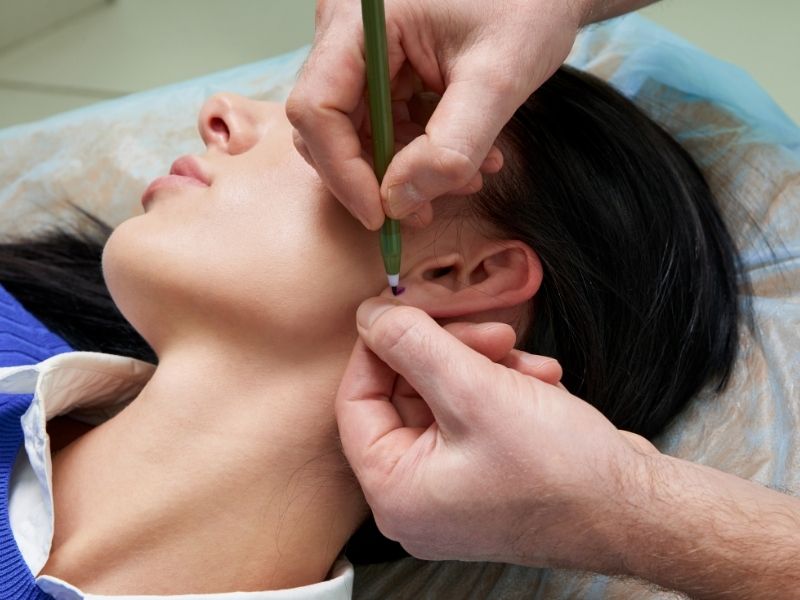
Prominent ear appearance is generally associated with the developmental anatomy of the external ear. Insufficient definition of the antihelix fold found in normal ear anatomy may cause particularly the upper part of the ear to project outward. If the hollow area called the concha is deeper or larger than normal, it may position the entire ear farther away from the head.
In some individuals, these two characteristics occur together, while the forward positioning of the earlobe or the distribution of cartilage in different parts of the ear may also affect the appearance. Familial characteristics may be important, and similar ear anatomy may be seen in more than one person within the same family. Since every ear deformity does not arise from the same anatomical cause, the correction plan is created by identifying the main structural difference in the ear.
A pronounced angle between the ears and the head, an indistinct antihelix fold, an excessively prominent concha, or the ears being positioned at different angles are among the reasons for surgical evaluation. Having previously undergone ear surgery without achieving the desired balance may also require reevaluation.
A person's tendency to constantly wear their hair in a way that covers the ears in daily life, significant discomfort with the appearance of the ears in social settings, or consistently avoiding showing the ears in photographs may be among the reasons for requesting surgery. However, the decision for prominent ear correction should be based more on the person's own expectations, existing anatomy, and the limits of the changes that can be achieved surgically rather than comments from others.
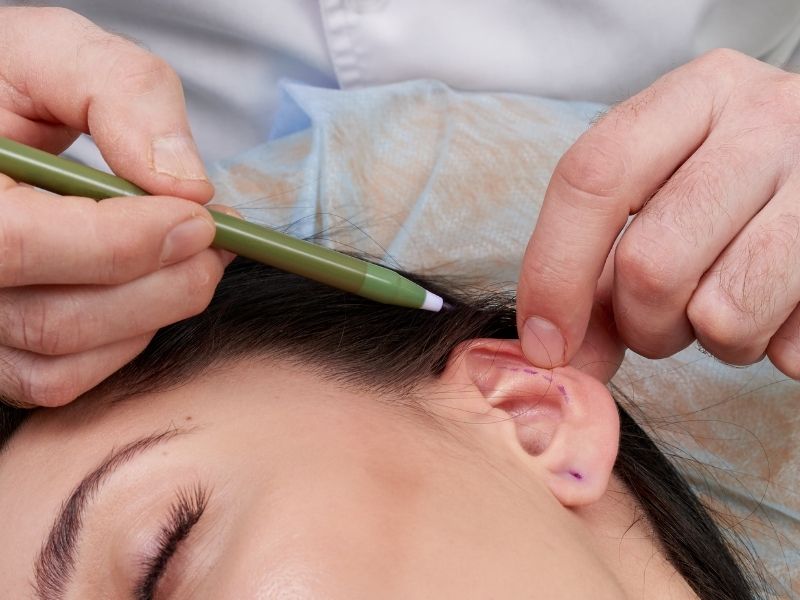
Before surgery, the ear is evaluated from the front, back, and side. The distance of the ear from the head, the angle in its upper and middle sections, the structure of the antihelix fold, the depth of the concha, the position of the earlobe, and differences between the two ears are examined. Photographs may be taken from different angles before surgery to document the current appearance of the ears and evaluate the planned changes in greater detail.
During the evaluation, the person's previous illnesses, surgeries, history of ear infections, regularly used medications, and conditions that may affect wound healing are also reviewed. If medications or supplements that affect bleeding risk are being used, the physician should determine how they should be managed. Smoking is also important in the preoperative evaluation because it may negatively affect tissue circulation and wound healing.
The surgical plan is created according to the person's ear anatomy. The cartilage can be accessed through incisions made behind the ear or in areas that can be concealed within the natural folds. The cartilage is then carefully shaped in the necessary areas, new folds are created, or the position of the ear relative to the head is rearranged with sutures.
In some ears, the primary need is to create a new antihelix fold, while in others, bringing the concha closer to the head is more important. When necessary, a limited amount of excess cartilage or soft tissue may be removed. The aim of the chosen technique is not to move the ear as far backward as possible, but to achieve a balanced position in which the natural folds are preserved when viewed from the front and side.
The flexibility and thickness of ear cartilage vary from person to person. In softer cartilage, creating a controlled fold with permanent sutures may be sufficient, whereas in harder and more resistant cartilage, superficial weakening or different shaping techniques may be used. This choice is made by considering the desired change during surgery and the behavior of the cartilage.
When shaping the cartilage, it is particularly important that the antihelix fold does not appear sharp or artificial. Since the folds in the natural anatomy of the ear continue with smooth transitions, surgical shaping is planned accordingly. Excessive cartilage removal or overtightening of the sutures may cause unnatural contours, so the correction must be performed in a controlled manner.
Prominent ear surgery does not have a single standard technique. Cartilage-preserving suture techniques, methods in which the cartilage surface is shaped in a controlled manner, and techniques involving limited cartilage removal in certain cases may be used. Permanent sutures placed from the posterior surface of the cartilage may be used to create the antihelix fold.
In cases where the concha is excessively prominent, the relationship between the concha and the mastoid region may be rearranged to reduce the distance between the ear and the head. In some patients, different techniques may need to be used together during the same surgery. The main factor determining technique selection is not that the surgeon applies a particular technique to everyone, but that the technique is appropriate for the person's anatomical needs.
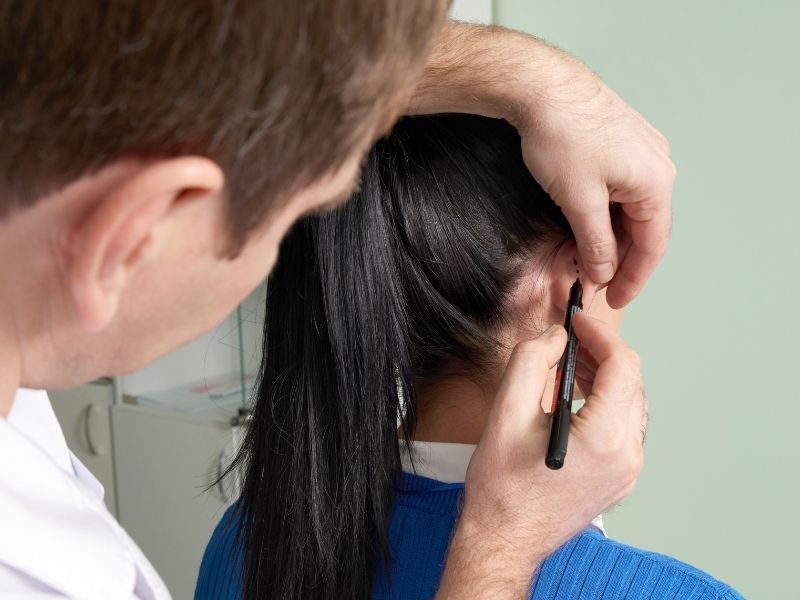
The incision is usually planned on the back surface of the ear, within the natural groove between the ear and the head. Since this area is not directly visible in daily life, it helps make the surgical scar less noticeable. In some techniques, small incisions may also be made through the natural inner folds of the ear.
The length and location of the incision may vary depending on the surgical technique used. A posterior approach can provide access to a large portion of the cartilage and allow sutures to be placed without being directly visible. At the end of the surgery, the incision is carefully closed and the ear is protected with a dressing that supports its new position.
Otoplasty can be performed under general anesthesia or, in suitable patients, with local anesthesia and sedation. The anesthesia method is determined according to the person's age, the extent of the surgery, whether one or both ears will be treated, the person's ability to remain comfortable during the procedure, and the anesthesia evaluation.
General anesthesia may be more commonly preferred in children to ensure movement control and allow the procedure to be completed comfortably. In adults, local anesthesia and sedation options may be considered under appropriate conditions. The type of anesthesia does not determine the aesthetic result; the main aim is to perform the surgical procedure under safe and comfortable conditions.
Although the duration of surgery varies depending on the extent of the procedures to be performed, standard otoplasty can generally be completed in approximately one to two hours. Shaping both ears to different degrees, having undergone previous surgery, or requiring additional cartilage procedures may alter the duration.
More important than the surgical duration is that both ears are repeatedly evaluated from different angles throughout the procedure. The distance of the ears from the head, the position of the upper and lower poles, the continuity of the folds, and the balance between the right and left sides are checked during surgery. Therefore, the duration of the operation does not depend solely on the number of incisions or sutures performed.
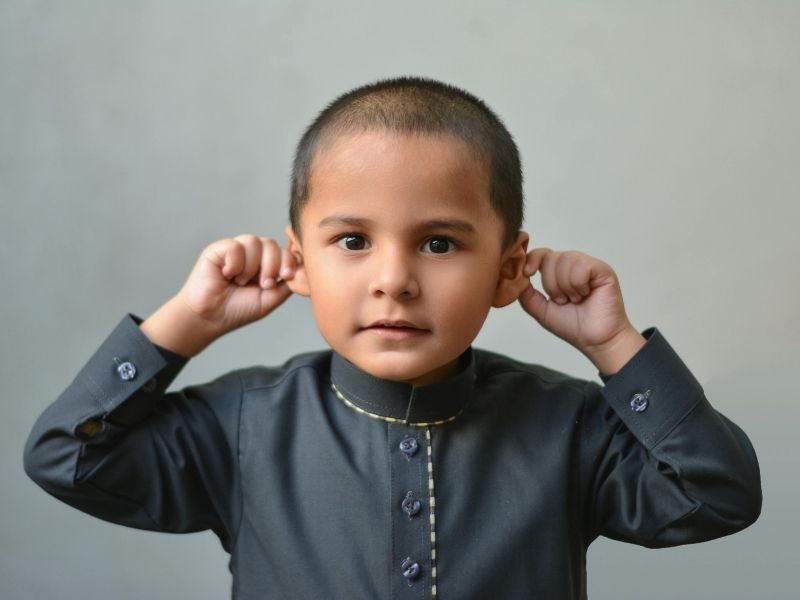
Children can be evaluated for surgery after most of the ear's development has been completed. Current medical sources indicate that otoplasty can be performed from approximately four to six years of age, while many evaluations consider age five and older. The exact timing is determined not solely based on age but also according to the development of the ear and the child's overall condition.
When evaluating prominent ears in children, the child's attitude toward surgery is also important. If the child does not want the operation or is not able to understand the process, making a decision solely based on the family's wishes is not considered an appropriate approach. Although surgery may be considered before school age, the same timing does not apply to every child, and individual evaluation is necessary.
Otoplasty is not a procedure performed only during childhood. The appearance of prominent ears in adults can also be surgically corrected when appropriate health conditions are present. Completion of ear development does not prevent the operation, and changes can still be made to the shape, position, or noticeable asymmetries of the ear in adulthood.
In adults, the cartilage structure may be firmer compared with childhood. This does not mean that surgery cannot be performed, but it may affect the technique used. When planning surgery, the resistance of the cartilage, existing ear folds, previous procedures, and the person's desired changes are evaluated together.
Immediately after surgery, swelling, tenderness, and mild bruising may occur in the ears. During the first few days, the ears may appear closer to the head or different compared with their preoperative appearance because the swelling in the tissues has not yet subsided. During recovery after prominent ear surgery, it is important to protect the ears from impacts, avoid sleeping on them, and follow dressing instructions.
During the first few weeks, swelling gradually decreases and the ear folds become more defined. The time required to return to daily life may vary depending on the extent of the procedure and the person's recovery. Activities involving a risk of contact or that may cause the ear to bend may need to be avoided for a longer period. Follow-up times and activity restrictions should be determined by the physician according to the person's surgery.
After surgery, a bandage or special dressing may be applied to protect the ear and support its new position during the initial healing period. How long the first dressing remains in place varies according to the surgical technique. In some approaches, the bandage is removed within a few days, while in other methods, it may be preferred for a longer period.
After the initial period is completed, a soft headband may be recommended for a certain period, particularly during sleep, to prevent the ear from accidentally folding forward. Since this period may vary from several weeks to longer durations, it is not appropriate to consider a single duration stated on the internet as applicable to everyone. The duration of bandage use is determined according to the technique performed and the healing process.
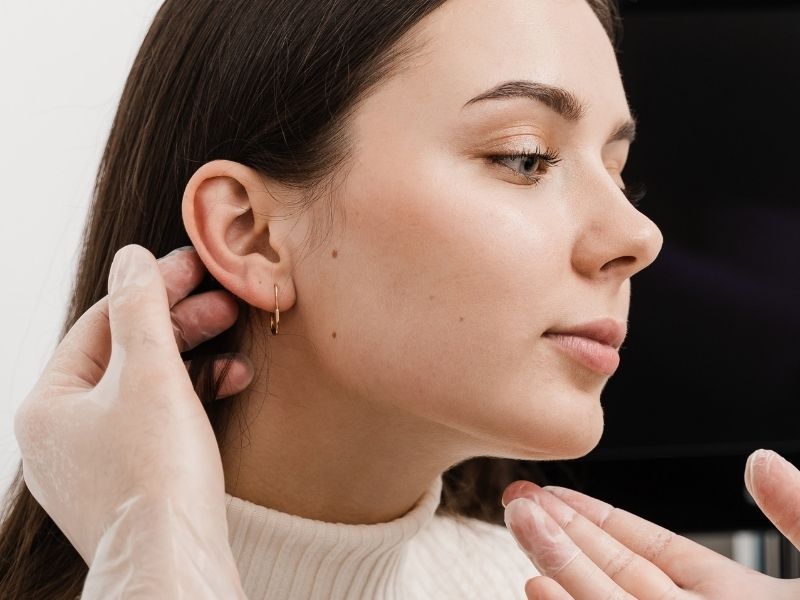
During the first few days after surgery, tenderness, tightness, a feeling of pressure, or mild to moderate pain may occur in the ears. These complaints are generally a natural part of the early recovery period. The aim is to reduce discomfort with pain-control methods recommended by the physician.
The expected pain should gradually decrease. Particularly within the first 24 to 72 hours after surgery, if pain progressively worsens, noticeable one-sided swelling, excessive redness, fever, or a rapidly developing feeling of pressure beneath the dressing occurs, medical evaluation may be necessary. These signs may require assessment for early complications such as hematoma or infection.
As with every surgical incision, a healing incision scar forms after otoplasty. However, in the standard approach, the incision is generally placed within the natural groove behind the ear, so it is not expected to be visible when viewed from the front. Over time, the color and prominence of the scar generally decrease.
The final appearance of the scar may vary according to the person's skin structure and wound-healing characteristics. Some individuals may be more prone to developing thick or raised scars. Therefore, it is important for people who have previously developed noticeable scars or keloids to mention this before surgery. Protecting the incision line from infection and unnecessary tension is also important for healing.
The changes achieved after otoplasty are long-lasting in most individuals, but it cannot be said that the possibility of recurrence is completely zero with any surgical technique. The tendency of the cartilage to return to its previous position, problems related to sutures, trauma to the ear during the early period, or healing characteristics may affect the final appearance.
Although recent studies show that recurrence after otoplasty may occur at low rates, the results vary according to the technique used and the patient group. Therefore, it is not appropriate to consider a specific percentage applicable to every individual. Correctly identifying the underlying anatomical cause during surgery and protecting the ear throughout the healing process are important for a lasting and balanced result.
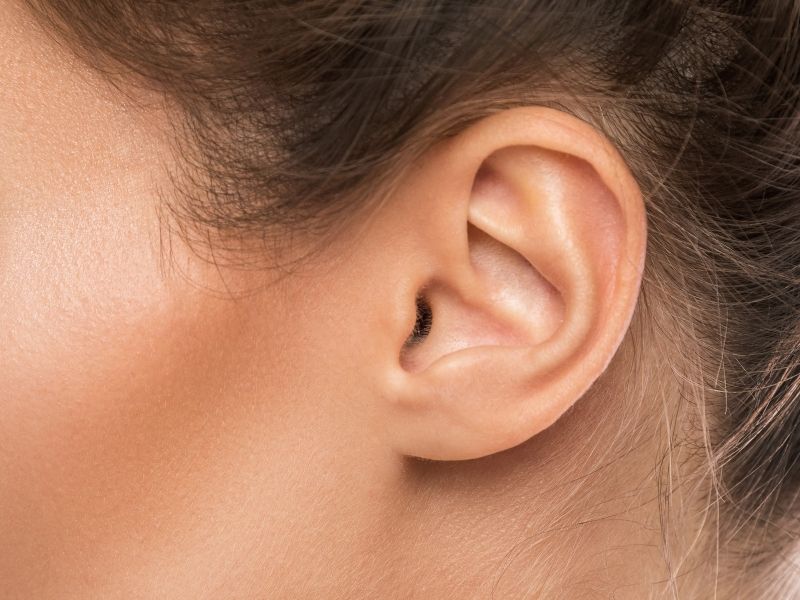
After the bandage is removed, the new position of the ear can be seen immediately, but this early appearance is not the final result. Swelling during the first days and weeks may cause the ear folds to appear thicker than they are or make the ear appear closer to the head. As the swelling decreases, the contours of the ear become more natural.
Complete softening of the tissues and maturation of wound healing take longer. Therefore, seeing small differences between the right and left ears during the early period does not necessarily indicate permanent asymmetry. When evaluating the final appearance, sufficient time should be allowed for the ears to heal, and the changes should be monitored together during follow-up visits.
Natural appearance is not determined solely by how close the ear is positioned to the head. The ear folds should not become excessively sharp, the upper pole should not be pulled too far backward, the earlobe should remain harmonious with the other parts of the ear, and the angle between the ear and the head should remain balanced at different levels. Excessive correction may cause the ear to appear as though it is stuck to the head.
It is not expected for both ears to be completely identical even in natural anatomy. In surgical planning, the aim is to reduce noticeable asymmetry rather than eliminate small natural differences. In an ear, nose, throat, and facial aesthetics approach, not only the ear itself but also the hairline, facial width, head structure, and the overall balance it creates when viewed from the front are evaluated.
Prominent ear appearance and having large ears are not the same condition. In some individuals, the ear size is normal, but because the angle it forms with the head is excessive, the ear may appear larger than it actually is. In these individuals, adjusting only the angle and folds may be sufficient. In cases where the ear is genuinely large, different surgical procedures aimed at reducing its size may be considered.
Whether ear reduction can be performed during the same session as otoplasty is evaluated according to which part of the ear is enlarged and the amount of tissue that would need to be removed. Since unnecessary tissue removal may disrupt the natural proportions of the ear, reduction should only be planned when there is an anatomical need. The main objective of this approach is not to make the ear as small as possible, but to create a size and shape that are balanced with the person's face and head structure.
For individuals researching surgery in Ankara, when searching for prominent ear aesthetics Ankara, it is important to focus not only on the technique used but also on whether the ear anatomy is evaluated in detail during the surgical assessment. Similarly, during research for otoplasty Ankara, the anesthesia plan, the reason for choosing the surgical technique, possible asymmetries, the recovery process, and the postoperative follow-up plan should be evaluated together. Since every ear structure is different, the most appropriate method can only be determined after an in-person examination and individualized surgical planning.
Showering after prominent ear surgery is determined according to the condition of the dressing and the surgeon's recommendation. The incision area should not come into direct contact with water before it is adequately protected.
After otoplasty, it is recommended to sleep on your back during the initial period and avoid putting pressure on the ears. The timing for switching to sleeping on your side may vary depending on the healing process.
After prominent ear aesthetic surgery, the arms of the glasses should not put pressure on the incision or the area behind the ear. The timing for resuming the use of glasses is determined according to the extent of the procedure performed.
After ear correction surgery, returning to daily life may be possible in the early period for most people, although swelling and sensitivity may continue for some time. After prominent ear surgery in children, protecting the ear from impacts at school is particularly important.
After prominent ear correction, light activities such as walking may be started earlier, but a longer period should be allowed before returning to sports that involve a risk of contact. The exact duration is determined according to healing and the surgical technique used.
As with any surgical procedure, risks such as infection, bleeding, asymmetry, scarring or changes in the position of the cartilage may occur after ear aesthetic surgery. Before prominent ear surgery in adults, these possibilities are evaluated together with the individual's health condition.
When researching prominent ear aesthetic surgery in Ankara or otoplasty in Ankara, consideration should be given not only to location but also to the physician's approach to evaluating ear anatomy, the techniques used and the postoperative follow-up plan. Planning the procedure individually is important for a natural result.
Prominent ear surgery corrects the excessive projection of the auricle from the head and reshapes prominent cartilage folds in harmony with ...

Otoplasty is ear aesthetic surgery. It corrects prominent ears and deformities, provides a natural appearance and self-confidence. It provid...