
Facelift Surgery
Facelift surgery (rhytidectomy) is an aesthetic surgical procedure that provides a younger, firmer, and natural appearance by eliminating sa...

Over time the facial area may experience volume loss, sagging and wrinkles due to gravity, the aging process and changes in skin structure. Decreased skin elasticity, loosening of connective tissues and weakening of the supportive structure of facial muscles are among the main causes of this process. These changes may manifest especially as sagging in the cheek area, decreased definition along the jawline and looseness in the neck region. One of the surgical methods applied in such situations is deep plane facelift surgery.
Deep plane facelift, which has an important place among the techniques used in facial rejuvenation, is a facelift surgery method performed by intervening in the deeper anatomical layers of the face. Thanks to developing techniques in aesthetic surgery today, it is aimed to achieve a more balanced and natural appearance while preserving the natural facial expression structure. This method, also known as deep plane facelift, may provide longer lasting results by repositioning not only the skin layer of the face but also the supportive tissues beneath the skin.
Deep plane facelift is one of the advanced surgical techniques applied to correct sagging in the middle and lower areas of the face. This method involves working in deeper anatomical planes that include muscles and connective tissues beyond the superficial skin layer of the face. For this reason, the most basic answer to the question what is a deep plane facelift is that it is a comprehensive facelift surgery in which facial tissues are repositioned in accordance with their natural anatomical structure.
In classical facelift surgery methods sagging is usually reduced by tightening the skin. However during deep plane facelift surgery the SMAS layer, which includes facial muscles and connective tissues, is released and repositioned. In this way instead of creating tension only in the skin, the entire structure of the face is lifted upward in a more natural way.
Questions such as what is face lifting or what is a facelift generally refer to facial rejuvenation surgery. However deep plane facelift is considered a more advanced and comprehensive form of these procedures. With this technique a more natural and longer lasting improvement can be achieved especially in the cheeks, jawline and nasolabial folds.
Signs of aging on the face may appear in different ways in different areas. Deep plane facelift surgery targets prominent sagging and looseness occurring in the middle and lower parts of the face. It is especially preferred in conditions such as downward displacement of cheek tissue, loss of jawline definition and looseness in the neck area.
This technique, which is evaluated within the scope of facelift surgery, may help reduce the deepening of nasolabial folds, sagging around the corners of the mouth and irregularities along the jawline. At the same time it becomes possible to reshape the overall contour of the face.
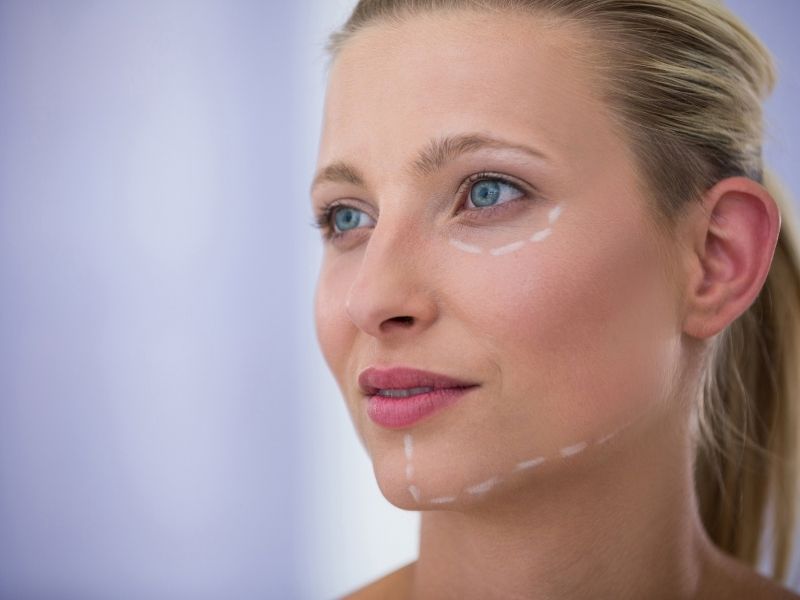
Since the deep plane facelift procedure aims to reposition facial tissues within their natural anatomical planes, it may contribute to results appearing more balanced. This method does not focus only on tightening the skin but also addresses the supportive tissues of the face. This approach may help the facelift procedure create a more natural appearance.
Deep plane facelift surgery is generally performed under operating room conditions and under general anesthesia. The surgeon reaches the facial tissues through incisions that begin in front of the ear and extend behind the ear. Since these incisions are usually hidden along the hairline and around the ear, noticeable scars generally do not occur after healing.
During the surgery the deeper anatomical layers of the face are reached and the sagging tissues are released. These tissues are repositioned upward to a more natural position and fixed. At this stage since not only the skin but also the supportive tissues of the face are repositioned, the results may appear more balanced.
During deep plane facelift surgery excess skin tissue may be removed if necessary. In this way the facial contour can be made more defined. The duration of the surgery may generally take several hours and additional procedures may be planned in the same session depending on the patient’s condition.
Different techniques are used in facial rejuvenation surgery. Classic facelift methods are mostly based on tightening the skin layer. Although this approach may provide short term improvement in some cases, it may not fully support the natural facial expression structure.
Deep plane facelift surgery involves working within deeper anatomical layers that include muscles and connective tissues beneath the skin. For this reason deep plane facelift allows facial tissues to be repositioned in a more comprehensive way.
Compared with the classic facelift surgery, the middle part of the face can be lifted more effectively with the deep plane facelift method. Cheek tissue, jawline and nasolabial folds may achieve a more balanced appearance with this technique. These differences have caused the deep plane facelift technique to be increasingly preferred in the field of aesthetic surgery.

Deep plane facelift surgery is generally considered a surgical method for individuals who have significant sagging and signs of aging in the facial area. Especially people who experience tissue looseness in the middle and lower regions of the face may benefit from this procedure.
Facelift surgery candidates should not have completely lost skin elasticity. In addition the person’s general health condition must be suitable for surgery. For this reason a detailed evaluation should be performed before surgical planning.
Deep plane facelift may be preferred in cases where the facial contour has lost its definition and sagging has occurred along the jawline. However the most appropriate approach for each patient is determined as a result of individual evaluation.
There is no exact age limit for facial rejuvenation procedures. Deep plane facelift surgery is generally evaluated after significant signs of aging appear in the facial area. For most individuals these changes become more noticeable starting from the forties.
When planning facelift surgery not only age but also skin structure, tissue sagging and the person’s general health condition are taken into consideration. For this reason surgical evaluation may be performed at earlier ages in some individuals while in others it may be planned at later ages.
Since the deep plane facelift technique is one of the methods that provides rejuvenation while preserving the natural structure of the face, it may be evaluated in different age groups.
After deep plane facelift surgery some temporary findings may be seen during the healing process. Swelling and bruising are among the most common conditions encountered after facelift surgery. These findings are usually noticeable in the first days after surgery.
The recovery process may vary from person to person. In most patients the majority of swelling and bruising significantly decrease within a few weeks. However it may take a longer period for the facial tissues to fully settle. During this process it is important to attend the follow up appointments recommended by the doctor regularly and to follow the recovery instructions appropriately. In this way the healing process after facelift surgery may progress in a more controlled manner.
Signs of aging on the face are often not limited only to the facial area. Looseness and sagging may also occur in the neck area. For this reason in some patients a neck lift procedure may be planned together with deep plane facelift surgery.
Neck lift aims to arrange the excess tissues in the area under the chin and to make the neck contour more defined. When this procedure is applied together with facelift surgery a more balanced appearance may be achieved between the face and neck area.
Deep plane facelift and neck lift procedures performed together may provide a more comprehensive rejuvenation in some patients. Surgical planning is shaped according to the patient’s anatomical structure and expectations.
Deep plane facelift surgery is considered one of the advanced techniques used in facial rejuvenation surgery. Since this method addresses not only the superficial layers of the face but also the deeper tissues, it aims to create a more natural appearance.
Thanks to the deep plane facelift technique the middle part of the face can be lifted more effectively and the jawline can become more defined. This may contribute to a more balanced appearance of the facial contour. This technique evaluated within the scope of facelift surgery may help preserve facial expressions. Adjustments made without excessive tension on the skin surface may support achieving a more natural result.
When deep plane facelift is applied with correct patient selection and appropriate surgical planning it is considered one of the methods that can provide effective results in the field of facial rejuvenation. For this reason it is evaluated as one of the techniques that are increasingly preferred in the field of aesthetic surgery.
Incisions made during Deep Plane Facelift surgery are usually planned along the natural folds located in front of and behind the ear. In this way the scars become less noticeable over time. During the healing process the appearance of the scars may vary depending on the person’s skin structure and care routine.
Deep Plane Facelift prices may vary depending on the scope of the surgery, additional procedures to be performed, the surgeon’s experience and the healthcare center where the surgery is performed. Therefore price information is determined after a personal examination and evaluation.
After Deep Plane Facelift surgery swelling and mild bruising may occur during the first days. These findings usually decrease noticeably within a few weeks for most people. Most individuals can return to their daily life within a short time, but it may take a little longer for the tissues to fully settle.
Deep Plane Facelift surgery is a surgical procedure that generally takes several hours. The duration of the surgery may vary depending on the person’s facial structure, the scope of the procedures to be performed and additional procedures that may be applied in the same session.
Deep Plane Facelift surgery repositions facial tissues and may provide long lasting results. However since the aging process continues natural changes may occur over time. The results obtained can generally be maintained for many years.
Since Deep Plane Facelift surgery is performed under general anesthesia no pain is felt during the procedure. After the surgery mild discomfort or a feeling of tightness may occur. This condition usually decreases in a short time for most patients and can be controlled with the treatment recommended by the doctor.

Facelift surgery (rhytidectomy) is an aesthetic surgical procedure that provides a younger, firmer, and natural appearance by eliminating sa...

Bichectomy is an aesthetic surgical procedure that aims to make facial features more balanced by improving cheek aesthetics, facial contour,...

Mentoplasty is a surgical procedure intended to change the shape, size, or position of the chin tip. It may be preferred for both aesthetic ...