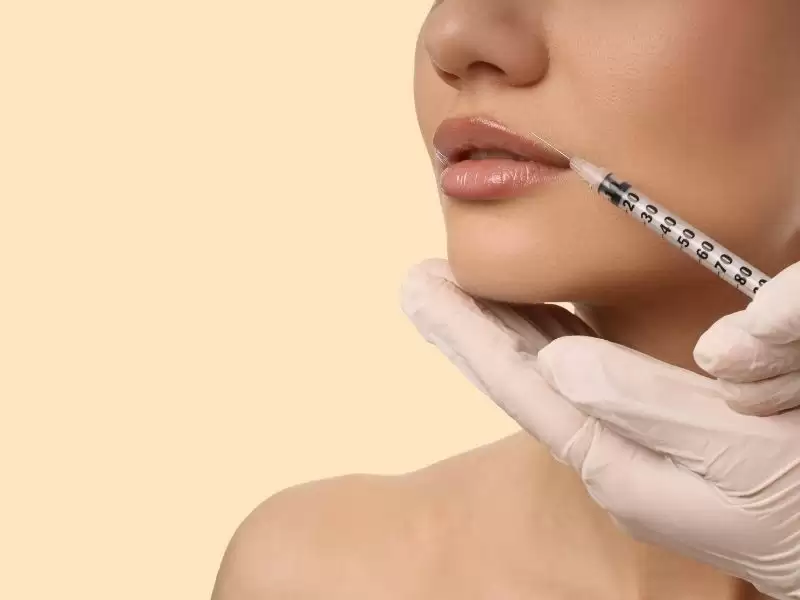
Lip Filler
Lip filler is a popular aesthetic procedure that provides a natural and fuller appearance by adding volume, shape, and symmetry to the lips ...

Without considering surgical procedures, people who aim for a more rested expression in their facial features have increasingly turned to injection-based facial rejuvenation applications in recent years. The liquid facelift approach aims to evaluate different needs such as volume loss, contour weakness, and the prominence of expression lines within a single plan. The main idea here is to create more balanced proportions by supporting certain areas of the face and to reduce the tired look in the expression. Since the scope of the application varies from person to person, determining the right areas is as important as choosing the right method.
The question what is a liquid facelift is used to describe applications that aim to bring facial features to a more balanced and rested look without making surgical incisions. The goal of this approach is to support volume loss in certain areas of the face, soften the appearance of lines caused by facial expressions in other areas, and make the overall expression look more compact. The effect of the application is shaped by the person’s facial structure, skin quality, age-related changes, and the targeted areas. The term “liquid” emphasizes working with injection-based materials rather than surgical tissue removal. In this context, a more balanced proportioning can be planned in areas such as the midface line, cheek support, jawline, and the area around the mouth. Although it may be considered an alternative to classic surgery, it may not serve the same goal in every person; because the degree of sagging, skin elasticity, and tissue weight directly affect planning. The application is generally handled with a personalized strategy by evaluating the dynamics of the face during examination.
Non-surgical approaches are not limited to a single procedure; different methods are planned together or separately depending on which need stands out in which layer of the face. In this context, when we say liquid facelift, the main goal is to support areas of the face that experience volume loss, define the contour, and reduce the appearance of lines caused by facial expressions. In faces where volume loss is prominent, support—especially in the midface—can help reduce the tired expression that occurs with weakening of the cheek fat pads. When this support is placed in the right points, not only the cheek line but also the transitions around the under-eye area and the harshness of the line at the corner of the mouth may move toward a more balanced appearance.
When contour is targeted, a clearer structure is aimed in areas such as the jawline, chin, and cheekbone region that form the frame of the face; the goal here is not to produce a “sharp” look, but to create a more gathered frame while preserving the face’s own proportions.
In cases where expression lines are dominant, the approach differs. In some people, lines become prominent not only due to thinning of the skin but also due to strong muscle movements. In this case, planning to control the effect of muscle movement comes to the agenda, focusing on reducing the speed at which expressions turn into lines without freezing facial expression. In addition, not every face is suitable for the same amount and the same injection points. Skin thickness, tendency to edema, facial asymmetries, the current status if procedures were done before, and the person’s daily facial expression habits directly affect planning. For example, in people prone to edema, proceeding more cautiously, avoiding excessive volume, and choosing a gradual approach can help achieve more balanced results. While a single session may be sufficient for some people, in others, progressing with small touch-ups over two or more sessions preserves naturalness and allows the face to adapt more balanced to the new look. Therefore, instead of expecting “to fix everything at once,” planning that progresses step by step according to the face’s needs and monitors the face’s response at each step is more realistic.
The answer to how a liquid facelift is done lies in the planning logic before the technique itself. In the first step, the face is evaluated in terms of proportions from the front and side, light-shadow areas, expression lines, and areas of volume loss. Then it is determined which area will be supported, by how much, and which points will be handled more carefully. The selection of different materials in practice varies according to the goal, skin structure, and anatomical features of the face. For example, if volume support is targeted, hyaluronic acid-based options can be planned; if the focus is on expression lines, an approach aimed at reducing the effect of muscle movement with botulinum toxin may be preferred. In some faces, more than one area is addressed in the same session, while in others, a gradual application may be more suitable to reduce the risk of swelling or sensitivity. Injection points, depth, and amount are important to preserve naturalness and avoid moving the facial expression into a fixed look. After the procedure, short-term redness, sensitivity, or small bruises may be seen; these effects usually do not delay returning to daily life for long.
Although the goals of these two approaches may seem similar, the method and area of effect differ. In surgical facelift procedures, the goal is to reposition sagging tissues to a higher location and to reorganize excess tissue; this can provide a more pronounced tightening in people with more advanced sagging. In the liquid approach, instead of tissue removal or tissue repositioning, an optical tightening effect is created by supporting certain areas of the face. At this point, the question “what does facelift mean” is also common; facelift is a term that refers to surgical facelift procedures, and its scope can vary depending on the technique chosen. Similarly, the phrase “what is face lifting” can be used in everyday language for both surgical and non-surgical applications; however, in medical usage it generally refers to the surgical approach. In non-surgical planning, the person aims for a shorter recovery time and gradual change, while in the surgical approach a more fundamental tissue repositioning is considered. In short, the difference becomes evident in variables such as the degree of sagging, the scale of expectation, recovery time, and the goal of durability.
This approach may be a more meaningful option especially for people who have mild to moderate volume loss and line appearance, and whose facial expression has become tired. If skin elasticity is preserved to some extent, it is possible to obtain a more balanced expression with support to certain areas of the face. However, in people with advanced tissue sagging, injection-based methods alone may not meet expectations; in this case, surgery or different combinations may be considered. In suitability assessment, the realism of expectations is as important as facial anatomy. For example, an expectation of lifting the face upward with a pronounced “pulling” feeling may exceed the limits of injection-based approaches.
In addition, in people who have previously had filler, the status of the existing material, tendency to edema, and skin structure are taken into account. One of the frequently asked topics is is a liquid facelift permanent; in non-surgical applications, the duration of effect may vary depending on factors such as the product used, metabolism, intensity of facial expressions, and lifestyle. Therefore, planning is handled as a care approach that can be renewed according to need rather than “a single result.”
These applications generally focus on balancing facial proportions and restoring lost support in certain areas. Areas such as the midface, cheek line, and jawline are frequently addressed in planning because they form the frame of the face. For example, with facial filler, cheek support can be increased to target a more balanced midface appearance; this approach can help regulate the areas of the face that catch light. When contour is targeted in the cheekbone area, planning referred to as cheekbone filler may come into focus. Around the mouth, volume loss and line appearance can be evaluated together; in this context, with nasolabial filler, the transition along the line between the side of the nose and the corner of the mouth can be moved to a softer appearance and the appearance of the nasolabial line can be reduced. Among the materials used, hyaluronic acid filler options are often discussed; the goal here is to establish a natural balance with different densities in different areas of the face. In all these plans, the main goal is not to enlarge the face from a single point, but to achieve a more holistic expression while preserving proportions.
The recovery process varies depending on the scope of the procedure, application areas, and the person’s skin structure. In the first days after the procedure, mild redness, sensitivity, or short-term swelling may be seen at the injection sites. Small bruises may occur in some people; this is usually temporary and does not require completely stopping daily routines. In the first days, avoiding heavy exercise, exposure to intense heat, and firm massage on the face may be recommended; because these situations can increase swelling and sensitivity. The expected appearance after the application usually settles into a more balanced state within a few days; especially in people prone to edema, it may require patience. One of the topics of interest is the heading liquid facelift harms; incorrect planning, excessive amount, unsuitable product selection, or applications not suitable for facial anatomy increase the risk of undesired outcomes. Therefore, the procedure should be handled with a physician assessment experienced in facial anatomy and product properties. Since the cost also varies by person, liquid facelift price is determined by the number of areas to be treated, the amount of product used, and the session plan.
The permanence of a liquid facelift varies from person to person. The type of application used, skin structure, intensity of facial expressions, metabolic rate, and lifestyle determine the duration of effect. Generally, permanence is not expressed with a single timeframe; in some people the effect lasts longer, while in others a need for earlier renewal may arise. The most accurate approach is to manage the process with follow-up intervals planned according to the face’s needs.
It is not correct to give a single age range for a liquid facelift. What matters more is what the face needs. If mild to moderate volume loss, contour weakness, or expression lines have started to become more noticeable, this method can be considered. In people with advanced sagging, it may be difficult to meet expectations. Suitability becomes clear with an examination based on facial structure and the goal.
What is felt during the procedure varies from person to person. The application area, skin sensitivity, and the scope of the procedure are effective. The level of discomfort is generally considered manageable, and short-term sensitivity may be seen after the procedure. Even in people with low pain perception, comfort can be increased with the procedure plan and application technique.
Short-term swelling may occur, but this is usually temporary. Tendency to swelling varies depending on the person’s propensity for edema, the scope of the application, and the areas treated. With correct amount and correct point planning, the risk of an “heavy” look is reduced. Especially in people with high edema tendency, proceeding more controlled and gradually gives more balanced results.
The initial appearance is usually noticeable immediately; however, a few days may be needed for the final look to become more natural. In people prone to edema, this process may take a little longer. The settling time of the face is related to the application areas, the approach used, and the person’s skin structure. Therefore, the same “settling day” cannot be stated for everyone.
Liquid facelift prices are not fixed and vary from person to person. The number of areas to be treated, the amount of product to be used, the need for sessions, and the targeted planning are the main determinants of the fee. While small touch-ups are sufficient for some people, a more comprehensive plan may be required for others. Clear pricing information emerges with the planning to be done after facial analysis.
The question of whether a liquid facelift is harmful mostly stems from concerns about safety and undesired outcomes. Correct indication, correct product selection, appropriate technique, and an approach that is proficient in facial anatomy increase safety. On the other hand, incorrect planning, excessive application, or methods not suitable for the facial structure can cause undesired appearances and side effects. Therefore, the application must be planned with a physician’s evaluation.
Small bruises may be seen in some people at the injection sites. Tendency to bruising varies depending on skin structure, capillary sensitivity, and the application area. It is generally temporary and decreases in a short time. Following post-procedure recommendations is important to reduce the risk of bruising.
Most people can return to their daily routine on the same day. However, since mild sensitivity, redness, or swelling may occur in the first days, timing should be considered if intensive social programs are planned. Situations such as heavy exercise, intense heat environments, and pressure on the facial area may be restricted for a short time.
One session may be sufficient for some people; in others, gradual application is preferred for a more natural and balanced result. Especially in those prone to edema or in cases where more than one area is planned, progressing step by step provides an opportunity to observe the face’s response. The goal is not maximum change in a single session, but to provide a controlled transformation while preserving facial proportions.
When planned correctly, the natural look of facial expressions can be preserved. The goal is not to freeze the facial expression; it is to reduce the effect of expressions turning into lines and to make the face look more rested. Since excessive application or an incorrect approach can negatively affect naturalness, personalized dose and area selection are important.
The prominence of change depends on which area of the face has the more dominant need. In areas such as midface support, jawline contour, or the transitions around the mouth, facial proportions can become more balanced. The best result is achieved with planning that considers the overall balance of the face rather than enlarging a single area.

Lip filler is a popular aesthetic procedure that provides a natural and fuller appearance by adding volume, shape, and symmetry to the lips ...
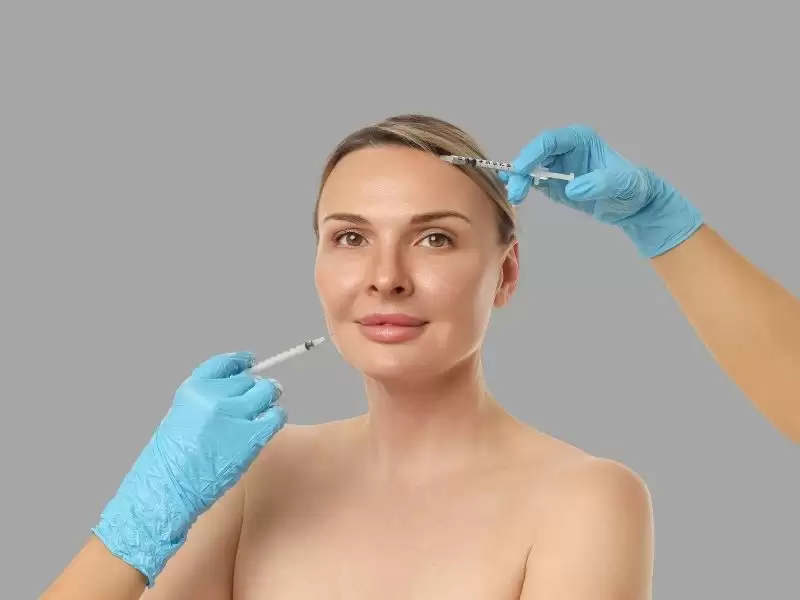
Facial filler is an aesthetic procedure that reduces wrinkles, restores volume loss, enhances facial contours, and provides non-surgical rej...
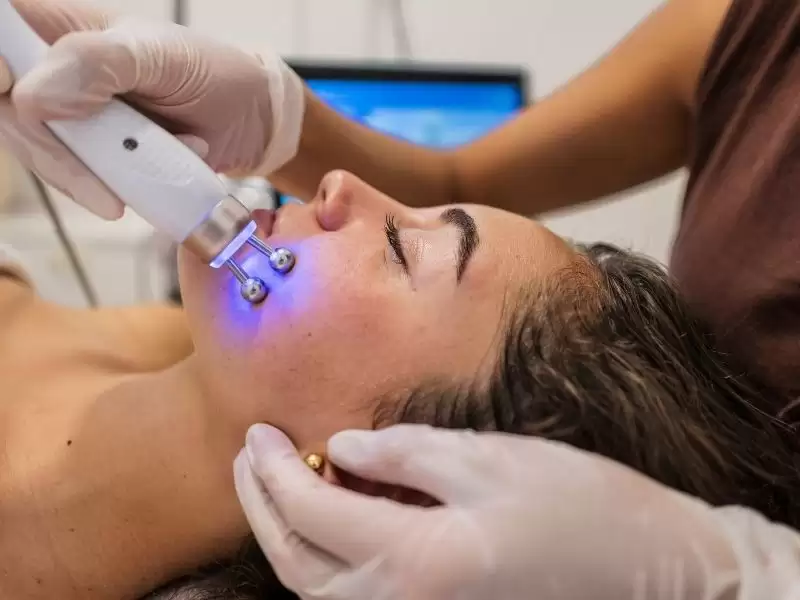
Skin rejuvenation refers to aesthetic procedures such as laser treatments, PRP, mesotherapy, and similar applications that aim to support sk...