
Prominent Ear Surgery
Prominent ear surgery corrects the excessive projection of the auricle from the head and reshapes prominent cartilage folds in harmony with
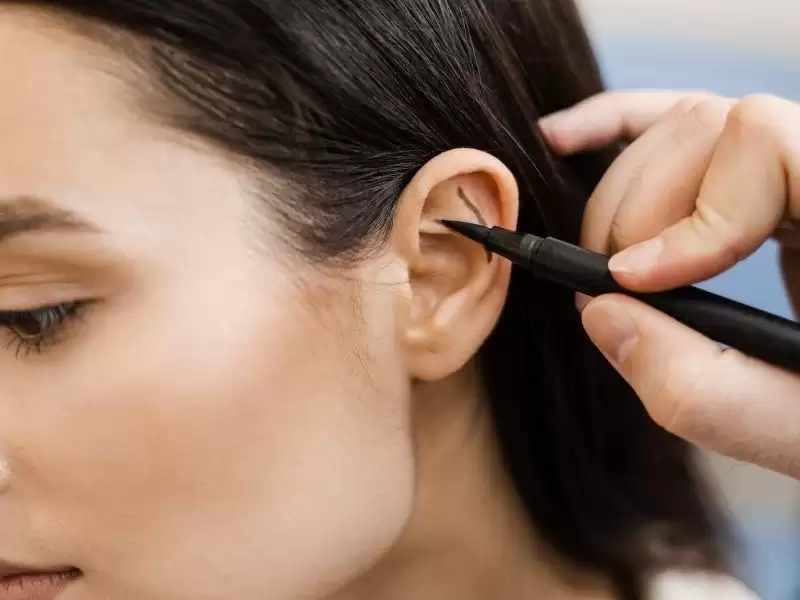
Ear aesthetics is the general term for surgical procedures that aim to create a more balanced appearance by evaluating the size, angle, folds, and harmony of the ears with the face. For individuals researching Ankara ear aesthetics, the treatment plan is based not only on bringing the ears closer to the head but also on evaluating both ears together with facial proportions. While otoplasty is most commonly performed to correct the appearance of prominent ears, prominent ear aesthetics is planned by taking the individual's unique cartilage structure into consideration.
Ear aesthetics includes surgical procedures performed to change the shape, position, or size of the outer ear. During the procedure, the natural folds of the ear are preserved as much as possible, while aiming for a result that is harmonious with the overall facial structure. Rather than simply setting the ear back, the balance of the upper, middle, and lower sections is considered together.
For some individuals, the primary goal is to reduce the angle between the ears and the head, while for others, ear reduction surgery or correction of a shape difference in a specific area may be considered. The technique to be used is determined according to the firmness of the cartilage, the structure of the skin, and the differences between the two ears.

The procedure may be considered for congenital shape differences, asymmetries that become noticeable during development, or deformities caused by trauma or the use of jewelry. Noticeable protrusion of the ears on both sides of the face is one of the most common reasons for seeking treatment.
In addition, insufficient development of the ear folds, folding of the upper part of the ear, a torn earlobe, or an ear size that appears disproportionate to the face may also be included in surgical planning. Auricular aesthetics requires a personalized approach shaped according to the existing structural difference rather than a single standard procedure.
Otoplasty is a surgical procedure that reshapes and repositions the outer ear. Although it is most commonly performed for prominent ears, it may also be used for congenital differences in ear folds, asymmetry, and certain traumatic deformities.
During an Ankara otoplasty evaluation, the individual's expectations, ear anatomy, and facial proportions should be considered together. The surgical plan is prepared not only according to the frontal appearance but also by taking into account the angles and folds that will be seen from the side and back.
The surgical technique varies according to the individual's age, cartilage structure, and the extent of the correction required. General anesthesia is usually preferred for children, while local anesthesia and sedation options may be considered for suitable adults. The incision is generally placed within the natural crease behind the ear.
During Ankara prominent ear surgery planning, an underdeveloped fold may be created, a wide inner ear bowl may be brought closer to the head, and limited cartilage reshaping may be performed when necessary. Sutures are positioned to maintain the new shape, the incision is closed, and the ears are supported with dressings during the initial healing period.

It is important that the individual's general health is suitable for surgery, that their expectations are realistic, and that they are able to follow the postoperative healing instructions. For ear aesthetics in adults, health status, tissue characteristics, and personal expectations are considered more important than a specific upper age limit.
When planning prominent ear surgery in children, ear development, whether the cartilage has reached sufficient strength, and whether the child wants the procedure should be taken into consideration. Although many approaches consider the procedure from the preschool years onward, the appropriate timing is determined individually for each child, and the decision should not be based solely on parental preference.
During the examination, the individual's medical history, medications, previous surgeries, and characteristics related to wound healing are reviewed. The ears are evaluated from the front, side, and back; when necessary, proportion and angle analyses may be performed using photographs.
Before surgery, the intended changes, possible limitations, incision locations, anesthesia options, and recovery plan should be discussed clearly. Rather than aiming to resemble a single photograph, informing the individual about results that are suitable for their own facial structure allows for more realistic planning.

Mild pain, tenderness, swelling, bruising, and temporary numbness may occur during the first few days. Dressings or bandages may be used to support the new position of the ears and protect them from external impact. Medications and wound care should be continued only according to the prescribed plan.
During recovery after otoplasty, it is important to avoid sleeping on the ear, protect the area from impact, and attend follow-up appointments as scheduled. Although the ear aesthetics recovery process varies from person to person, swelling continues to decrease and the tissues gradually soften over time.
The timing of returning to desk work or school depends on the extent of the procedure and the individual's healing rate. Many people can return to their daily routine approximately one week after the initial follow-up appointments, but they should avoid clothing that may pull on the ears and situations involving a risk of contact.
After prominent ear surgery, returning to sports, swimming, and intensive physical activity may be planned for a later period. Particularly in contact sports, the timing should be determined according to the surgical team's examination findings because of the risk of trauma to the ear.
Because the incision is generally placed within the natural crease behind the ear, it is not visible when viewed from the front. A scar that may initially appear pink or noticeable can gradually become closer to the surrounding skin tone and less visible over time.
The appearance of the scar depends on the individual's skin structure, wound-healing characteristics, incision care, and sun protection. Individuals who have a tendency to develop raised or hardened scars should mention this during the preoperative evaluation.
Because the new shape of the cartilage is supported with sutures and surgical adjustments, the resulting change is generally long-lasting. However, during healing, the cartilage may move slightly toward its previous position, or limited relaxation may occur over time.
Studies report that complications such as recurrence, suture-related problems, bleeding, and infection may occur at low rates. The surgical technique used, cartilage characteristics, protection from trauma, and adherence to recovery instructions may influence the durability of the result.

The procedure is performed on the cartilage and skin structures of the outer ear. Since the ear canal, eardrum, middle ear, and inner ear structures are not treated, standard aesthetic procedures are not expected to alter hearing levels.
The bandage used after surgery may temporarily make sounds seem more muffled. Individuals with pre-existing hearing loss, ear discharge, recurrent infections, or problems involving the ear canal should also undergo an ear, nose, and throat evaluation.
A natural appearance is achieved not by setting the ears back as far as possible, but by creating an angle that is harmonious with the width of the face and the structure of the head. A balanced overall result is planned by avoiding excessive flattening of the upper ear, balancing prominence in the middle section, and controlling the direction of the earlobe.
Good planning aims for both ears to appear balanced from the front, side, and back, while not attempting to completely eliminate natural minor differences. The goal is to reduce the prominence of the ears without changing the facial expression, preserve the natural folds, and avoid an operated appearance.
Prominent ear surgery corrects the excessive projection of the auricle from the head and reshapes prominent cartilage folds in harmony with
Otoplasty aims to create a more balanced and natural ear appearance by adjusting the angle of the ears in relation to the head and reshaping

Otoplasty is ear aesthetic surgery. It corrects prominent ears and deformities, provides a natural appearance and self-confidence. It provid