
When Should You Return to Social Media After Rhinoplasty?
Returning to social media after rhinoplasty should be evaluated based on the rhinoplasty recovery process, swelling, psychological readiness...
Today, artificial intelligence is now present in many areas of our lives. Aesthetic surgery is one of them. Especially patients considering rhinoplasty can now try different nose shapes on their own faces with nose design with artificial intelligence and get an idea of how they may look after surgery.
At this point, an important question arises:
Can a nose designed for you by artificial intelligence really be surgically achieved?
Nose design with artificial intelligence is a planning support tool that enables the evaluation of nasal structure, facial proportions, profile balance and aesthetic expectations in a digital environment before rhinoplasty. While this technology makes the patient’s possible postoperative appearance more understandable, it does not show a definite result on its own.
An ENT and facial aesthetics specialist evaluates AI-supported nose design together with the internal nasal structure, breathing function, skin thickness and facial anatomy. Therefore, AI-supported rhinoplasty simulations should be interpreted together with the doctor’s experience in terms of natural appearance goals and surgical suitability.
Nose design with artificial intelligence helps make nose shape, facial proportions, profile balance and aesthetic expectations more understandable in a digital environment during rhinoplasty planning. AI-supported rhinoplasty simulations help patients express their preoperative expectations, while they are used as a supportive evaluation tool for the ENT and facial aesthetics specialist during the surgical planning process.
This is where the technical and surgical side of the process comes into play.
Artificial intelligence systems work by analyzing millions of photos, facial proportions, aesthetic perception and which faces people find more attractive. They evaluate the relationship between the nose and chin, analyze facial geometry and offer suggestions that may look aesthetically pleasing to you. Moreover, these systems continue to learn constantly. Thanks to user feedback, data flow and visual analyses, AI-supported nose designs are becoming more realistic every day.
However, there is a very important distinction here: A nose that looks beautiful in a photo and a nose that can be surgically achieved in real life are not always the same thing.
Because rhinoplasty is not only a visual correction procedure.
and many other factors directly affect the surgical result.
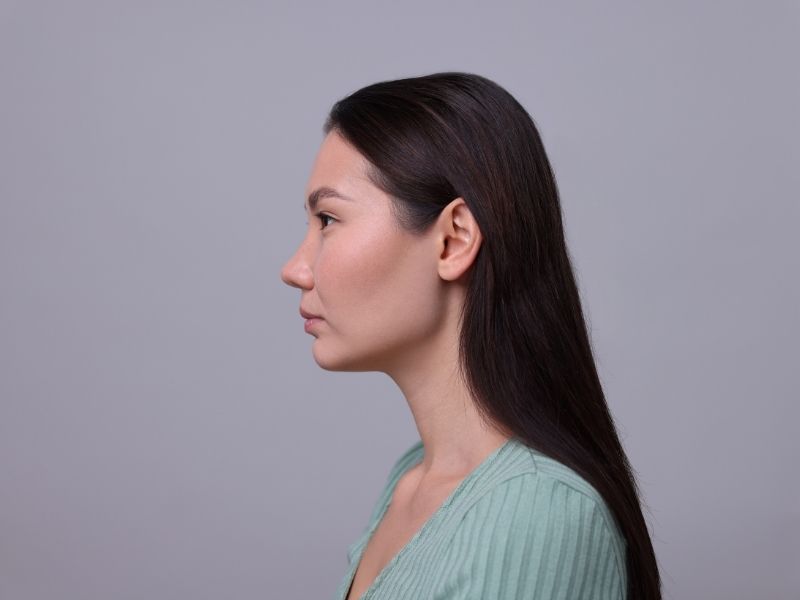
Nose design with artificial intelligence can create an aesthetically attractive image for you. However, what still evaluates whether that nose can technically and realistically be achieved is the surgeon’s experience, technical knowledge and surgical foresight.
The surgeries a surgeon performs over the years, the healing processes they follow, the complications they encounter and thousands of hours of practice gradually create a “surgical memory.” This is one of the points that artificial intelligence still cannot fully replace today.
In the design your doctor prepares for you, they consider not only what looks aesthetically beautiful, but also the result that will be achievable and natural in real life.
With the experience I have gained from the surgeries I have performed and the patients I have followed throughout the process from Dr. Tevfik Sözen to Prof. Dr. Tevfik Sözen, I aim to offer you results that are not only aesthetically pleasing, but also natural, functional and realistic.
I see rhinoplasty simulations and design studies as an important part of preoperative communication. Because these studies help establish a common language between the patient and the doctor and allow expectations to be understood more accurately.
For this reason, I believe it is very important to allocate enough time to the design process before rhinoplasty and to discuss expectations in detail.
AI-supported simulations can provide a general idea, but they do not guarantee real surgical results exactly.
No. Factors such as skin structure, anatomy and healing capacity determine surgical limits.
The surgeon’s experience enables aesthetic appearance, natural results and breathing function to be evaluated together.
Artificial intelligence can assist with planning and visualization, but surgical experience and clinical evaluation are still indispensable.
Returning to social media after rhinoplasty should be evaluated based on the rhinoplasty recovery process, swelling, psychological readiness...
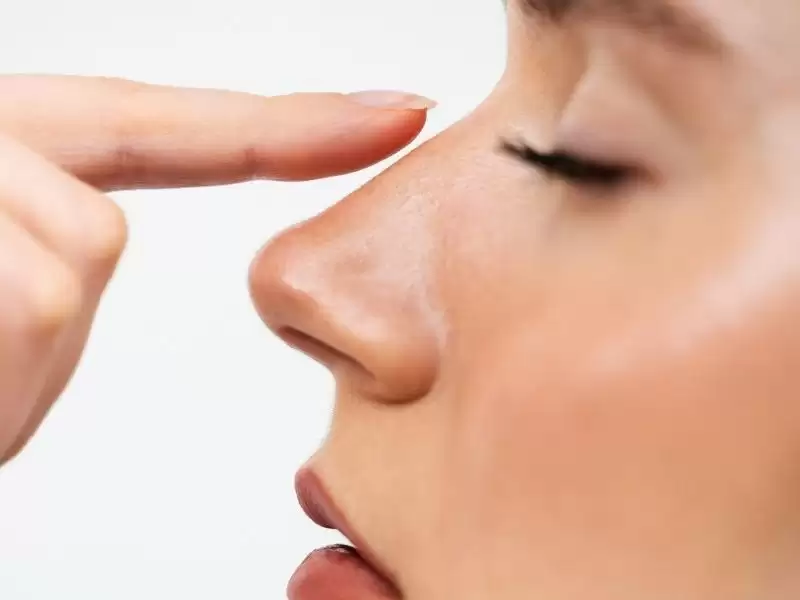
Not being able to breathe comfortably through the nose quietly but effectively makes daily life more difficult. This problem is often associ...
Nasal deviation, septum deviation, and breathing problems should be evaluated together with nasal congestion, snoring, and treatment options...